
Stamford Bridge has one of those matchday approaches that feels as if the city suddenly turns into a football crowd. One minute you are in ordinary west London, and the next you are carried along by shirts, scarves, and that rising pre-match buzz.
A fun fact that makes the place even more interesting is that Stamford Bridge opened in 1877, nearly three decades before Chelsea Football Club was founded in 1905, so the ground is actually older than the club that made it famous.
That mix of old-school history and big-city matchday energy is exactly what makes the journey feel special. But it is also why a bit of planning helps. If you are wondering how to get to Chelsea football stadium, this guide breaks down the best routes, the easiest transport options, and the smartest ways to avoid turning the trip to Stamford Bridge into the hardest part of the day.
Where Is Stamford Bridge and How Do You Find It?
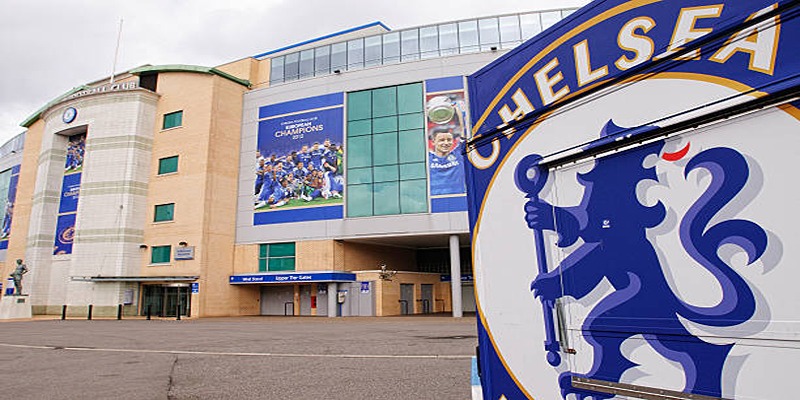
Stamford Bridge is on Fulham Road in west London, with the official address listed by Chelsea FC as Stamford Bridge, Fulham Road, London, SW6 1HS. The stadium capacity is 40,044, and it is one of the most central football grounds in London.
So if you are asking where Chelsea football stadium is, the simple answer is this: it sits in the Fulham area, between Fulham Broadway, West Brompton, and Imperial Wharf, surrounded by shops, homes, bars, and busy London roads rather than giant open car parks. That is part of its charm, but it also explains why trains and buses matter so much on matchdays.
| Detail | Information |
| Official Stadium Name | Stamford Bridge |
| Club | Chelsea Football Club |
| Address | Fulham Road, London, SW6 1HS |
| Stadium Capacity | 40,044 |
| Closest Tube Station | Fulham Broadway |
| Zone | Zone 2 |
| Nearby Rail/Overground Options | West Brompton, Imperial Wharf |
| Main Road Outside | Fulham Road |
| Chelsea’s Main Advice | Use public transport because parking is very limited |
If you are planning more than one match or live event during your trip, it can also help to compare travel routes across different venues. Our guides on how to get to the O2 Arena in London and how to get to London Stadium break down other useful venue journeys across the city.
Now that you know where you are going, the next question is the one that actually matters on the day: what is the easiest way to get there?
What Matches Are Coming Up at Stamford Bridge?
If you are planning a visit in the final stretch of the 2025/26 season, Chelsea still have several notable home fixtures at Stamford Bridge. Based on current fixture listings, key home games include Manchester United in April, Nottingham Forest in early May, and Tottenham Hotspur later in May.
However, Premier League fixtures are always subject to change due to television scheduling and cup competitions, so it is important to confirm the latest details on the official Chelsea website before travelling.
| Date | Kick-off | Home | Away | Venue |
| Sat 18 Apr 2026 | 8:00 PM | Chelsea | Manchester United | Stamford Bridge |
| Sun 26 Apr 2026 | 3:00 PM* | Brighton | Chelsea | Amex Stadium |
| Mon 4 May 2026 | 3:00 PM | Chelsea | Nottingham Forest | Stamford Bridge |
| Sat 9 May 2026 | 3:00 PM* | Liverpool | Chelsea | Anfield |
| Sun 17 May 2026 | 3:00 PM* | Chelsea | Tottenham Hotspur | Stamford Bridge |
*Kick-off times may change depending on TV scheduling.
The Three Home Games Still to Come at Stamford Bridge
With three key home matches remaining in the 2025/26 Premier League season, there are still strong opportunities to experience Stamford Bridge at its best. Each fixture brings a slightly different matchday atmosphere, and planning your journey accordingly can make a noticeable difference.
i. Chelsea vs Manchester United | Saturday 18 April 2026, 8:00 PM
A major evening fixture under the lights and one of the biggest matches of the run-in. Expect heavy demand on public transport, especially at Fulham Broadway before and after the game. Arriving early is strongly recommended.
ii. Chelsea vs Nottingham Forest | Monday 4 May 2026, 3:00 PM
A daytime kick-off that is generally easier to manage in terms of travel. Public transport runs more smoothly, though the area will still be busy as Stamford Bridge fills up.
iii. Chelsea vs Tottenham Hotspur | Sunday 17 May 2026, 3:00 PM (Subject to Change)
A high-intensity London derby and one of the standout fixtures of the season. Demand will be high, and all travel options, including trains, taxis, and private transfers, should ideally be booked in advance.
| Important Note! |
| Tickets and any fixture updates should always be checked on Chelsea’s official website before travelling, especially because television selections and cup progress can shift dates and kick-off times. |
How to Get to Chelsea Football Stadium?

You can reach Stamford Bridge by Tube, bus, National Rail or Overground connections, car, taxi, coach, cycling, or a pre-booked private transfer. For most people, the answer is public transport. Chelsea specifically advise fans against driving on matchdays because parking restrictions and limited local spaces make the area difficult by car.
| Matchday Journey Flow |
| Choose Your Start Point ↓ Central London / Greater London / Airport / Outside London ↓ Pick Your Travel Mode ↓ Tube / Bus / National Rail / Overground / Car / Taxi / Coach / Cycle / Private Transfer ↓ Arrive at Fulham Broadway, West Brompton, Imperial Wharf, or Stadium Drop-Off Area ↓ Walk to the Turnstiles ↓ After the Match ↓ Leave Immediately or Wait a Bit for Crowds to Ease |
1. Tube
For most visitors, the Tube is the best answer. Chelsea’s official guidance says Stamford Bridge is easily accessible by Tube via Fulham Broadway, and TfL lists Fulham Broadway as a Zone 2 District line station with lifts and boarding ramps. The station is the closest Underground stop and sits only a short walk from the stadium.
| Starting Point | Route | Approx. Time |
| Victoria | District line to Fulham Broadway | 15–20 mins |
| Westminster | District line via connections | 20–25 mins |
| South Kensington | District line westbound | 10 mins |
| Earl’s Court | District line to Fulham Broadway | 5 mins |
| Wimbledon | District line eastbound | 20–25 mins |
| Paddington | Tube connection to District line | 25–30 mins |
Why Does the Tube Work So Well?
The Tube is simple, frequent, and drops you closest to the ground. Once you arrive at Fulham Broadway, the rest is easy. You come out into the shopping and station area, follow the matchgoing crowd along Fulham Road, and reach Stamford Bridge in a matter of minutes.
Coming from Central London
If you are coming from places like Victoria, Westminster, South Kensington, or Blackfriars, the District line is usually the smoothest route. It is one of those London journeys that looks more complicated on a map than it feels in real life. Once you are on the right line, it is mostly just a case of staying on and following the crowd.
What About After the Match?
This is where a little patience helps. Fulham Broadway gets packed after big games. If the station looks heaving, many fans either wait a little while in the area or walk to West Brompton instead. That gives you another rail and Overground option and can make the journey home less frantic. West Brompton is about a 15-minute walk from the ground and is connected to both National Rail and London Overground, with District line access too.
| Best Public Transport Route to the Chelsea Football Stadium |
| Tube to Fulham Broadway, then a short walk. |
2. Bus
Chelsea’s official travel guidance says there are two bus stops right outside Stamford Bridge on Fulham Road, and supporters can use routes 14 and 211. TfL also shows services at the nearby Fulham Road / Beaufort Street stop, including 14, 211, and 345, with 24-hour service at that stop.
| Bus Route | Useful For |
| 14 | Travel from Putney and through parts of central London |
| 211 | Travel from Hammersmith toward Battersea Power Station |
| 345 | Helpful local connection near the ground |
The bus is a solid choice if you are already in west or south-west London and want to avoid Tube changes. It is also good for people who prefer staying above ground rather than dealing with packed platforms.
Bus Travel Tips
Buses can be very convenient before the match, especially if you are nearby. After the game, though, road congestion can slow everything down. On a quiet day a bus journey feels easy. On a busy evening fixture, it can feel like the whole of west London has decided to move at once.
So buses are best for:
- Local journeys
- Fans staying nearby
- Visitors who do not mind a slightly slower trip
- Anyone not in a rush after the final whistle
If you are coming from central London and want speed, the Tube usually wins. If you are already on the right side of town and want simplicity, the bus can be perfectly fine.
3. National Rail and Overground
This is the option plenty of people forget about, but it is genuinely useful. Stamford Bridge is also within walking distance of West Brompton and Imperial Wharf. Trainline and South Western Railway both note that West Brompton and Imperial Wharf are around a 15-minute walk away, and West Brompton also connects with the District line and Overground.
| Station | Distance to Stadium | Why It Helps |
| Fulham Broadway | Shortest walk | Best all-round option |
| West Brompton | ~15 mins walk | Great after matches, rail + Overground + District |
| Imperial Wharf | ~15–17 mins walk | Useful from south-west London routes |
When These Stations Are Especially Handy?
West Brompton is often the clever fallback when Fulham Broadway is crowded. It gives you more choice and can be a calmer way to leave after the match.
Imperial Wharf is useful if you are coming from the south-west or combining National Rail with a short walk. It is not as direct as Fulham Broadway, but for some routes it saves you backtracking across London.
4. Car
Driving to Stamford Bridge is possible, but Chelsea make it very clear that it is not the recommended option. The club advises against driving because parking around the ground is extremely limited and local resident restrictions apply Monday to Sunday. Chelsea also highlighted newer local parking controls in nearby zones, with restrictions running from 8:30am to 10pm Monday to Sunday in Zone F and Zone S.
What to Know Before You Drive?
This is not one of those out-of-town stadiums where you roll up, swing into a huge car park, and stroll in. Stamford Bridge sits in a built-up London neighbourhood. That means:
- Residential parking controls
- Matchday congestion
- Limited legal visitor space
- Slow post-match traffic
Chelsea’s matchday pages repeatedly recommend public transport for exactly this reason.
Accessible Parking
Chelsea do provide pre-bookable accessible parking for Blue Badge holders, with up to nine bays available on matchdays, allocated on a first-come, first-served basis. Chelsea’s access information says some of those spaces are on site and some are not, depending on the fixture and arrangements.
Is Driving Ever Worth It?
It can make sense if:
- You have accessibility needs
- You are travelling with older family members
- You are being dropped off rather than parking
- You are using a pre-arranged driver instead of parking yourself
For everyone else, driving tends to create more problems than it solves.
5. Taxi or Rideshare
A taxi is a very normal and sensible way to get to Stamford Bridge, especially if you are travelling from a hotel, a station, or somewhere in central London. This works particularly well if you are in a pair, in a group, carrying bags, or simply cannot be bothered with line changes.
From central London, the journey time depends heavily on traffic, but on a normal day it is often somewhere in the 20 to 35 minute range depending on your pickup point. Matchdays can push that up.
When a Taxi Makes Sense?
A taxi or rideshare is a good option for:
- Families with children
- Visitors arriving from hotels
- Older supporters
- People on a tighter schedule
- Anyone arriving for hospitality, business, or a first visit to London
The awkward bit is the journey home. Just like at concerts and other big events, lots of people want a car at the same time. It helps to book in advance and be prepared to walk a little away from the thickest crowd if your driver asks for a better pickup point.
6. Coach
Coach travel works in two different ways here. First, if you are coming from outside London, you can travel into the capital by coach, usually via Victoria Coach Station, then continue by Tube, taxi, or pre-arranged transfer. National Express lists London Victoria Coach Station as its main London hub with standard passenger facilities, and TfL also provides official station information for Victoria Coach Station.
Second, Chelsea also have a limited coach parking area near Stamford Bridge and a dedicated official page for coach parking arrangements. The club’s visiting supporters guide notes that coach parking is available near the ground, though limited.
| Coach Type | Best Use |
| National coach to London | Visitors coming from outside London |
| Organised supporter coach | Groups or away supporter travel |
| Private hired coach | Larger groups, events, hospitality, school or corporate visits |
7. Private Transfer
If you are not starting your journey right on the Tube network, it helps to think about the full trip rather than just the final stop at Fulham Broadway. Some visitors are coming from central London hotels, some from the airport, and others are travelling as a family or in a small group.
For most people, public transport is still the simplest choice. But there are situations where a direct road journey makes more sense, especially if you are carrying luggage, travelling with children, arriving on a tighter schedule, or trying to avoid busy post-match stations.
In those cases, a pre-arranged event transfer or airport transfer service can be easier to manage than changing lines or working around queues at Fulham Broadway. If you are flying into London before the match, Heathrow Airport taxi transfers and Gatwick Airport taxi transfers are the most relevant options depending on where you land.
8. Walking or Cycling
If you are staying locally, Stamford Bridge is very walkable by London standards. Chelsea’s official travel page notes there is bicycle storage available at the stadium, and the club also lists cycling as one of the ways to get there.
- Walking: From Fulham Broadway, it is a short and simple walk. From West Brompton or Imperial Wharf, it is a longer but still perfectly manageable walk of about 15 minutes or so depending on pace and crowd flow.
- Cycling: Cycling is sensible for local supporters, though it is still central London, so you need normal urban caution and a proper lock. It is one of the easiest ways to avoid queues entirely if you already live nearby.
Directions to Stamford Bridge from Different Parts of London

Sometimes the clearest answer is not “bus or train?” but “what should I actually do from where I am?”
| Starting Point | Recommended Route |
| Victoria | District line to Fulham Broadway |
| Westminster | District line with simple westbound route |
| South Kensington | District line to Fulham Broadway |
| Earl’s Court | District line to Fulham Broadway |
| Clapham Junction | Rail/Overground options via West Brompton, then walk or change |
| Paddington | Tube to District line, then Fulham Broadway |
| Heathrow | Piccadilly line toward central London, then change to District line or take road transfer |
| Gatwick | Rail into London, then District line or pre-booked car |
| Central London hotel | Taxi, Tube, or private transfer depending on group size |
If your journey starts at the airport, it is worth planning that first leg properly as well. Our guide on how to get to Heathrow Airport can help with London-side connections.
The broad rule is simple:
- Tube for most solo travellers and couples
- Taxi or transfer for convenience
- Rail plus West Brompton as a very handy alternative
- Car only if you have a strong reason
What’s Included in a Chelsea Football Club Tour and How Do You Book?
If you cannot get match tickets, or you simply want to see the place properly without the rush of a game, the chelsea football club tour is a very good shout.
Chelsea’s official tours page says the standard tour is a live-guided 60-minute tour of Stamford Bridge that includes the dressing rooms, press room, players’ tunnel, and pitchside areas. The Museum is also included, and Chelsea describe it as the biggest football museum in London. Chelsea’s tour help page says you should allow around two hours onsite in total if you want to enjoy both the tour and museum properly.
What You Get on the Tour
The tour takes you behind the scenes of Stamford Bridge and into areas you would never normally see on a matchday. It is a relaxed, guided experience that gives you a proper feel for how the club operates beyond the stands.
- Dressing rooms
- Press room
- Players’ tunnel
- Pitchside access
- Museum entry
- Guided commentary from a live tour guide
Chelsea’s tour booking site also shows regular daily availability, and the help page lists typical opening hours for tours and the museum across the week.
| Tour Feature | Details |
| Main Tour Length | About 60 minutes |
| Museum Included | Yes |
| Suggested Visit Time | Around 2 hours total |
| Guide Type | Live English-speaking guide |
| Runs on | Monday to Sunday |
| Booking | Through Chelsea’s official tours platform |
On non-matchdays, getting there is much easier. The same Tube route still works, but the atmosphere is calmer, the area is less packed, and the whole visit feels more relaxed.
Is Stamford Bridge Easy to Access for Disabled Fans?

Chelsea and TfL both provide accessibility information that is genuinely useful. TfL lists Fulham Broadway as having lifts and boarding ramps. Chelsea’s access pages say Stamford Bridge has accessible entrances, accessible toilets, lifts across the stadium, audio commentary for visually impaired supporters, and pre-bookable accessible parking for Blue Badge holders.
Accessibility Features
| Feature | Details |
| Step-free station facilities nearby | Fulham Broadway has lifts and ramps |
| Accessible stadium entrances | Yes |
| Stadium lifts | Available across all stands |
| Accessible toilets | Yes, including a changing place toilet |
| Audio commentary | Available for blind and visually impaired supporters |
| Accessible parking | Pre-bookable Blue Badge spaces |
If you have specific access needs, it is wise to contact Chelsea in advance rather than leaving it to the day.
What Should You Know Before You Travel?
Now that you have the full picture, here are the practical things worth remembering before you head to Stamford Bridge.
- Public transport is the default answer. Chelsea recommends it, and that is not just boilerplate advice. Parking is genuinely awkward around the ground.
- Fulham Broadway is easiest, but not always best on the way home. For getting in, Fulham Broadway is ideal. For leaving, West Brompton can sometimes be the calmer option if the station queues look heavy.
- Evening kick-offs need more planning. Late starts mean heavier crowds, more pressure on taxis, and a bit more hassle on the way home.
- Arrive earlier than you think you need to. This is especially true for big fixtures like Manchester United or Tottenham. West London traffic and crowded stations can eat time surprisingly fast.
- If you are in a group, do the maths on a private car. A pre-booked transfer can work out better than people expect once you split the fare.
- Do not assume driving will be easy. It will not. Not here. Stamford Bridge is central, urban, and tightly packed. That is great for the atmosphere and not great for parking.
Heading to Stamford Bridge? Here Are the Key Things to Remember
Getting to Stamford Bridge is not difficult once you pick the right route for your day. For most people, the Tube to Fulham Broadway is the simplest answer. Buses work well if you are already nearby. West Brompton is a handy backup. Taxis and pre-booked transfers make life easier if convenience matters more than keeping costs as low as possible. And driving is something to think twice about unless you truly need to do it.
So, if you are still asking how to get to Chelsea football stadium, the best short answer is this: use public transport if you can, use Fulham Broadway if you want the easiest route, and consider a pre-booked car or transfer if you are travelling with others or want a smoother door-to-door trip.
Plan it well, leave a little earlier than feels necessary, and Stamford Bridge becomes a very enjoyable ground to reach. In a city as busy as London, that is saying something.
Want to skip the station crowd and keep the day simple?
For groups, families, hotel pickups, or visitors arriving from central London, a pre-booked transfer such as My London Transfer can be a comfortable middle ground between packed public transport and the headache of driving yourself.
Frequently Asked Questions (FAQs)
1. How can you get there to Chelsea stadium?
The easiest way to reach Stamford Bridge is by Underground or Overground services. Most visitors use the District Line to Fulham Broadway station, while nearby rail options like West Brompton station and Imperial Wharf station provide convenient alternatives within walking distance.
2. What tube station is Chelsea FC?
The closest Underground stop to Stamford Bridge is Fulham Broadway station on the District Line. From the station, it is a short walk along Fulham Road, with the stadium clearly signposted and easily accessible within a few minutes.
3. How far is Chelsea’s stadium from the tube?
Stamford Bridge is located very close to Fulham Broadway station, with an average walking time of around 5 to 7 minutes. The route is straightforward, making it the most convenient option for matchdays and stadium visits.
4. Which tube line goes to Chelsea?
The District Line is the primary Underground route serving Chelsea, stopping at Fulham Broadway station. Nearby stations such as Sloane Square station and South Kensington station are also served by Circle and Piccadilly lines.
5. What is the best station for Chelsea?
The most convenient station for visiting Stamford Bridge is Fulham Broadway station due to its proximity. Travellers can also use West Brompton station, which connects to multiple rail and Underground services nearby.
6. How far is Chelsea from Central London?
Chelsea is located roughly 7 miles from Central London and can be reached in about 15–20 minutes by Underground or train. Routes through key stations provide quick access, making it a well-connected area for both visitors and daily commuters.
7. Is Chelsea a good area to stay in London?
Chelsea is widely regarded as one of London’s most desirable neighbourhoods, known for its elegant streets, safety, and proximity to attractions like Hyde Park and museums. It offers a comfortable stay with excellent transport links and a refined atmosphere.
8. How do I get to Chelsea from London?
The fastest way to travel from Central London to Chelsea is by Underground, often taking under 10 minutes depending on your starting point. Direct bus routes are also available, offering frequent services and convenient stops near major landmarks.
9. How do I book a taxi to Chelsea football stadium from central London?
Book a licensed black cab, a minicab, or a rideshare through an app ahead of time, using Stamford Bridge on Fulham Road as your destination. On busy matchdays, it is wise to leave extra time and pre-book your return as well.
10. How do I book a coach to Chelsea football stadium?
If you are travelling from outside London, book a coach to Victoria Coach Station with a national operator, then continue by Tube or car. For private group coach travel, arrange the vehicle separately and check Chelsea’s official coach parking guidance in advance.
11. What is the best public transport route to the Chelsea football stadium?
For most people, the best route is the Tube to Fulham Broadway on the District line, then a short walk along Fulham Road to the ground.