When a Eurostar broke down inside the Channel Tunnel during one of the hottest spells of the year, thousands of people learned the hard way that a train is the most fragile link in any journey to the airport. Stranded for hours, many missed their flights entirely. With Network Rail recording track temperatures as high as 51C and the network warning of hundreds of thousands of minutes of heat-related delays in a single year, the case for rethinking how you reach Heathrow or Gatwick when the temperature climbs has never been stronger. A pre-booked airport transfer in a heatwave is no longer a luxury but a sensible precaution.
What Happened When the Heatwave Hit the Railway?
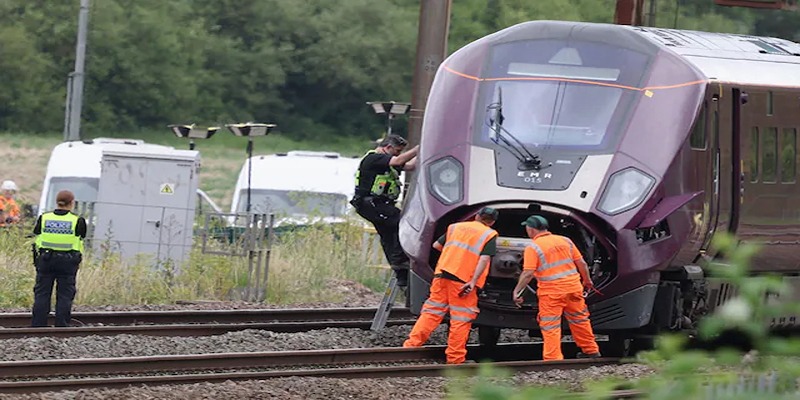
Image Source: telegraph.co.uk
During a record-breaking heat day in the South East, a Eurostar service broke down in the Channel Tunnel and left two trains stranded. Thousands travelling between London and Kent faced severe delays, and many missed flights or onward connections before rescue trains could tow the stuck services clear.
The disruption did not stay contained. When a Southeastern train tried to reverse back towards Kent to clear the line, it broke down too. Passengers who gave up on the route diverted to Stratford and finished their journeys on a Tube network where temperatures had already pushed past 30C. All of this happened the same week London recorded 35C in Kew Gardens, the hottest May day ever recorded in the UK. It was not a freak event. It was the predictable result of running a heat-sensitive railway through extreme heat.
Why Do Trains Fail in a Heatwave?
Trains fail in a heatwave because steel rails expand as they heat, and once the air hits 30C, rails in direct sun can reach 50C or higher. Past a safe threshold the metal can bend out of shape, a process called buckling, which forces speed limits and line closures to prevent derailments.
The damage builds up through several linked failures:
- Buckled Tracks. Network Rail has recorded track temperatures as high as 51C. Slower trains exert less force on the rail, so blanket speed restrictions come in.
- Overhead Wire Failures. The power lines that feed many services sag and snap in extreme heat, halting trains where they stand.
- Lost Air Conditioning. When a train loses power, onboard cooling is often the first thing to go, turning a sealed carriage into an oven.
- Cascading Delays. One stranded service blocks the line behind it, so a single fault multiplies into network-wide heatwave train cancellations.
Will the Heatwave Cause Train Cancellations to the Airport?
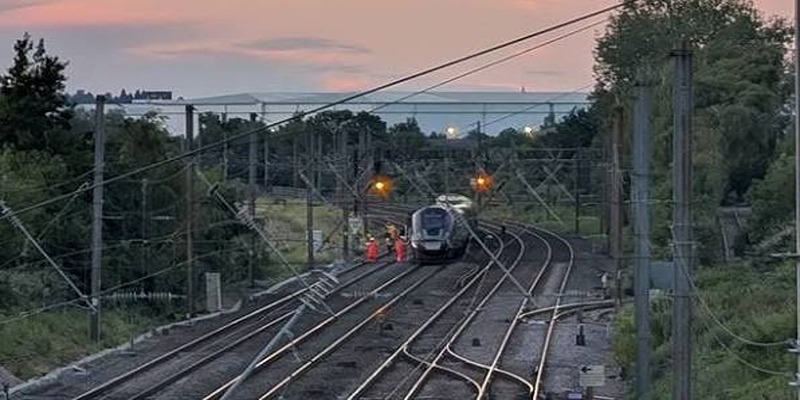
Image Source: bbc.com
Yes. Extreme heat regularly forces Network Rail to impose speed restrictions, which leads to widespread cancellations and delays on the exact routes airport travellers rely on, including Gatwick Express delays and Thameslink disruption. On the deep Underground lines with no air conditioning, the journey becomes punishing as well as slow.
The routes most exposed are the ones people use to reach the terminals:
| Route | Typical Heatwave Impact |
| Gatwick Express and Thameslink to Gatwick | Speed restrictions, cancellations and long delays |
| Piccadilly Line to Heathrow | Deep-level trains with no air conditioning, dangerously hot onboard |
| East Coast Main Line | Full line closures during peak afternoon heat |
| Brighton Main Line | Blanket speed limits and a reduced timetable |
Anyone planning a Heathrow airport transfer or Gatwick airport transfer by public transport in a heatwave is gambling on the two systems least able to cope: a buckling railway above ground and a sweltering tube below it.
What Does a Stranded Train Mean If You Have a Flight to Catch?
A stranded train with a flight to catch usually means a missed flight, because the journey has a fixed deadline the railway cannot guarantee in extreme heat. The passengers stuck in the Channel Tunnel did not just lose comfort. Many lost their flights, and a missed summer flight is expensive and slow to recover from.
The fallout from one disrupted leg stacks up fast:
- Replacement Fares. Last-minute tickets bought at the highest prices of the year.
- Rebooking Fees. Admin and change charges that were never in the budget.
- Lost Plans. A wasted first night of a holiday, or a business meeting that simply does not happen.
- Vulnerable Travellers. Families with young children, older passengers and anyone with heavy luggage, trapped in the hottest, most crowded carriages.
For anyone connecting through a major terminus like Waterloo or Euston, a stalled service does not just cost comfort, it puts the whole onward journey at risk.
Is an Airport Transfer in a Heatwave Better Than the Train?

An airport transfer in a heatwave is more reliable than the train because a private vehicle does not depend on a single fixed line that a breakdown miles away can block. The cabin stays cool and under your control from your door to the terminal, and the route can adapt in real time when conditions change.
The advantages are structural, not just a matter of comfort:
| Factor | Train in a Heatwave | Private Airport Transfer |
| Cooling | Shared system that fails on power loss | Dedicated air conditioning, door to door |
| Route | Fixed line, blocked by a single fault | Flexible, reroutes around problems in real time |
| Reliability | Speed limits, cancellations, closures | Unaffected by track buckling |
| Luggage | Hauled across platforms and connections | Stays with you in the vehicle the whole way |
| Flight deadline | No guarantee in extreme heat | Timed around your flight with margin to spare |
A Climate You Control
A private airport transfer gives you an air-conditioned taxi that is yours alone, with no shared cooling system to overload and no power cut to leave you stranded in the heat. You step from one cool space into another.
A Route That Can Change
Unlike a train locked to one line, a professional chauffeur can reroute around problems as they happen. The journey is door to door, with no platforms, no connections and no crowds in between.
Timing Built Around Your Flight
Flight times and traffic are monitored, so the pickup is planned with margin to spare. Your luggage stays with you the whole way, and the deadline that the railway could not honour becomes something you no longer have to think about. None of this makes a car immune to a hot day, but the road network handles heat far better than steel rails.
How Far Ahead Should You Book a Transfer in a Heatwave?

Book a taxi to the airport at least 48 to 72 hours ahead during a heatwave. Demand spikes the moment a major rail cancellation is announced, fleets fill quickly through bank holidays and half-term, and booking early is the only reliable way to secure an air-conditioned vehicle for your slot.
The pattern repeats every hot spell. As soon as the “do not travel” warnings appear, the people who planned ahead are already booked, and the ones who waited are left competing for whatever is left. A pre-booked door to door transfer takes the most exposed part of a hot-weather trip and turns it into the part you no longer worry about.
The Smart Way to Travel This Summer
Heatwaves are becoming a fixed feature of the British summer rather than a rare event, and the rail network openly admits it was not built for them. The travellers stranded for four hours in the Channel Tunnel did nothing wrong. They simply trusted a system that, in extreme heat, breaks down at exactly the moment a flight deadline matters most.
The travellers who arrive on time this summer will be the ones who planned around that fragility rather than through it. For any journey that ends at a departure gate, an airport transfer in a heatwave is the move that takes the railway’s worst day off your itinerary entirely.
Why Risk It When You Could Already Be Booked?
Why gamble your flight on a railway that openly warns you to stay away on its worst days? With My London Transfer, lock in a cool, fixed-price, cheap airport taxi ride from your door to the terminal before the next heat alert sends everyone scrambling for the same vehicles. Book your airport transfer in seconds, add your flight number, and let the team handle the timing while you travel in air-conditioned comfort.
Frequently Asked Questions
1. Do Trains Run in a Heatwave?
Trains do run in a heatwave, but often on a reduced and slower timetable. Network Rail imposes speed restrictions when track temperatures climb, so services are fewer, busier and more likely to be delayed or cancelled. On the most extreme days, whole lines close and operators issue “do not travel” advice.
2. Why Do Train Tracks Buckle in Hot Weather?
Train tracks buckle because steel rails expand as they heat. When the metal cannot move freely it pushes against itself, builds up stress and bends out of shape. A buckled rail can derail a train, so operators slow services down or close the line until the track cools and can be checked.
3. At What Temperature Do Train Tracks Buckle?
UK rails can reach 20C hotter than the air, so a 30C day can push track temperatures to 50C or more. Network Rail has recorded rails as high as 51C. Most of the network copes up to around 46C, beyond which speed restrictions are introduced to reduce the risk of buckling.
4. Are There Speed Restrictions on UK Trains in Hot Weather?
Yes. During extreme heat, Network Rail enforces blanket speed restrictions, sometimes as low as 20mph on the worst-affected sections. Slower trains put less force on the rail, which lowers the chance of buckling. The trade-off is longer journey times and a knock-on wave of delays and cancellations.
5. Will the Heatwave Cause Train Cancellations to Gatwick?
Yes. Heat regularly forces speed restrictions on the Brighton Main Line, which leads to Gatwick Express delays and Thameslink cancellations into the airport. Because these are high-frequency commuter routes, even moderate restrictions can remove dozens of services and leave the remaining trains heavily overcrowded.
6. Does the Heathrow Express Have Air Conditioning?
The Heathrow Express is air conditioned, which makes it one of the more comfortable rail options in hot weather. The risk is not the train itself but the wider network feeding into Paddington, where heat-related delays and cancellations can still disrupt your connection before you reach it.
7. Does the Piccadilly Line to Heathrow Have Air Conditioning?
No. The Piccadilly Line uses deep-level Underground trains that are not air conditioned, so on a 35C day the journey to Heathrow can become dangerously hot. This is one of the least comfortable ways to reach the airport in a heatwave, especially with luggage or young children.
8. How Hot Does the London Underground Get in a Heatwave?
Deep Tube lines with no air conditioning can climb well past 30C in a heatwave, often hotter than the street above. Carriages stay warm because heat from trains and braking builds up in the tunnels. The Piccadilly, Central, Bakerloo, Northern and Victoria lines are the worst affected.
9. Does Thameslink Have Air Conditioning?
Thameslink trains do have air conditioning, but the system can struggle or fail in extreme 35C heat, particularly when carriages become overcrowded after earlier cancellations. A working cooling unit also offers little comfort if the train itself is stuck behind a heat-related fault on the line.
10. Is It Safe to Travel With Children on the Tube During a Heatwave?
It is best avoided where possible. Deep Tube lines with no air conditioning can become extremely hot, and children and babies are more vulnerable to heat than adults. An air-conditioned taxi from door to door is a far safer option for families travelling in extreme heat.
11. What Happens If I Miss My Flight Because of Train Delays?
If you miss a flight because of a train delay, the airline is usually not responsible. Most carriers will not refund or rebook a flight missed due to public transport failures, so you typically pay for a new ticket yourself. This is the core financial risk of relying on rail in a heatwave.
12. Will My Airline Refund a Flight Missed Due to Train Delays?
Generally no. Airlines treat ground transport as your responsibility, so a flight missed because of a cancelled or delayed train is not normally covered. Travel insurance may help in some cases, but the simplest protection is a transfer with a guaranteed arrival time built around your flight.
13. How Much Extra Time Should I Allow to Reach the Airport in a Heatwave?
If relying on public transport in a heatwave, allow at least two extra hours to absorb heat-related cancellations and slower services. With a pre-booked private transfer, the dispatch team plans the pickup around live traffic and your flight, so you do not have to guess at a buffer yourself.
14. How Do I Avoid Heat Exhaustion on the Way to the Airport?
Stay hydrated, avoid crowded non-air-conditioned carriages, and limit time spent waiting on hot platforms or in sealed trains. The most reliable way to avoid heat exhaustion en route is to travel door to door in an air-conditioned vehicle rather than through stations and connections in extreme heat.
15. Do Airport Transfer Prices Rise During a Heatwave or Train Strike?
With a fixed-fare private transfer, no. Unlike ride-hailing apps that use surge pricing when demand spikes, a quoted fixed fare stays the same regardless of weather or rail disruption. The price you book is the price you pay, which makes budgeting predictable during chaotic travel days.
16. Is a Taxi Better Than the Train to the Airport in a Heatwave?
In a heatwave, yes. A private transfer does not rely on a heat-sensitive fixed line, stays cool from door to terminal, and is timed around your flight. The train becomes slowest and least reliable in extreme heat, which is exactly when an airport deadline leaves no room for delay.
17. Are Private Airport Transfer Cars Air Conditioned?
Yes. A private airport transfer is air conditioned throughout, giving you a cool, controlled cabin from pickup to drop-off with no shared system to overload and no risk of cooling cutting out the way it does on a stalled train.
18. Can I Get a Refund If My Train Is Cancelled Because of Heat?
Usually yes for the train ticket itself. Operators normally offer free refunds or ticket swaps when services are cancelled in extreme heat. What they will not cover is the wider cost of a missed flight or onward connection, which is where the real expense of heat disruption lands.
19. What Does a “Do Not Travel” Warning Mean?
A “do not travel” warning is official advice from Network Rail or operators to avoid rail journeys unless absolutely necessary, usually during extreme heat or other severe conditions. It signals that services will be heavily disrupted, slow and uncomfortable, and that any journey carries a high risk of delay or cancellation.