It is a still July afternoon. The platform indicator flickers. Your train is delayed, again. When it finally arrives, the carriage is packed, the windows do not open far, and the air is thick and warm. The train crawls instead of speeds. Somewhere ahead, the rails are too hot to run on. Welcome to UK heatwave travel, a summer ritual that is becoming more common every year.
Heat does strange things to a railway built in the Victorian era. Steel rails can run up to 20°C hotter than the air around them, and during the record summer of 2022 a rail temperature of 62°C was logged in Suffolk. As National Rail explains, that heat makes rails buckle, overhead wires sag, and trains slow down for safety. The result is delays, cancellations, and very hot carriages.
This is not a one-off. In 2022 the UK passed 40°C for the first time on record, with 40.3°C at Coningsby in Lincolnshire, as documented by the House of Commons Library. Four heatwaves were declared in 2025, and 2026 has already delivered the hottest spring on record along with early summer heat alerts. Hot summers are now part of the plan, not the exception.
This guide covers everything you need for travelling in a heatwave across the UK. You will learn why the network struggles, how hot it really gets, the real travel risks, and simple ways to stay cool and on schedule, whether you are crossing London or heading to the airport with the family.
| At A Glance | Details |
| Issue | Heat affects older UK rail and Tube infrastructure. |
| Affects | All travellers, especially vulnerable passengers and those with luggage. |
| When | Heat-health season runs 1 June to 30 September. |
| Worst Hit | Older trains, deep Tube lines, southern and eastern routes. |
| Travel Tip | Use a climate-controlled private transfer on hot or alert days. |
Why Do UK Trains Struggle So Much in Hot Weather?
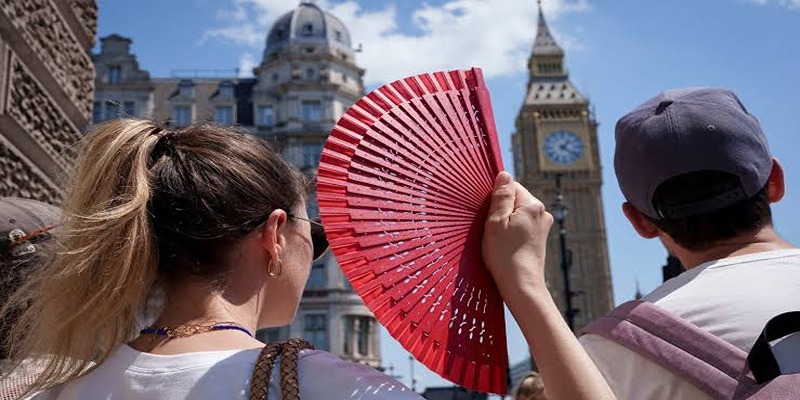
Image Source: shortlist.com
Hot countries run trains in 40°C heat all the time, so why does the UK grind to a halt? The answer is simple. The network was designed for a cool, damp climate, not for the heat it now faces.
Victorian Infrastructure Meets Modern Heat
Much of the British railway dates back more than a century, and it was never built to shrug off extreme heat. When temperatures climb, steel rails expand and push against each other. With nowhere to go, they can buckle, which forces a line to close until it is repaired. Overhead power lines also expand and sag, so trains slow down to avoid tearing them. Add dry, cracked ground under the tracks and you get the temporary speed limits that turn a fast service into a long, warm crawl. These are the hidden mechanics behind most train delays in hot weather, and they are exactly why planning an airport transfer in a heatwave is worth doing before disruption begins.
| Heat Effect | What Happens | Impact |
|---|---|---|
| Rails Expand | Tracks can buckle. | Lines may close. |
| Overhead Lines Sag | Wires droop in heat. | Trains slow down. |
| Equipment Fails | Safety systems are affected. | Services pause or reduce. |
| Ground Dries | Soil shrinks under tracks. | Speed restrictions apply. |
| Did You Know? |
| In July 2022 the UK recorded its hottest ever rail temperature of 62°C in Suffolk. Rails routinely sit around 20°C hotter than the air, so a 35°C day can mean blistering steel. |
How Hot Does It Actually Get on Public Transport?
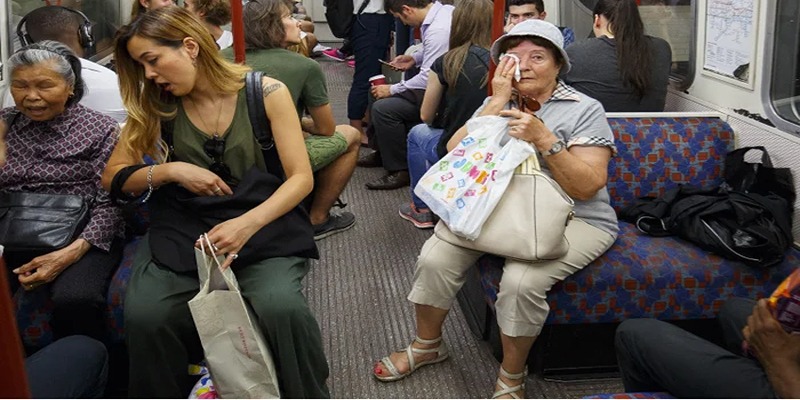
Image Source: theguardian.com
If you have ever stepped onto a summer Tube and felt the heat hit you like an oven door, you are not imagining it. Carriages and platforms can be hotter than the street above.
Carriages and Platforms Can Be Hotter Than the Street
The London Underground opened in 1863 and is the oldest network of its kind in the world. Many of the deep lines have no air conditioning, because there is nowhere for the hot air to escape in the tunnels. A surprising amount of the heat comes from the trains themselves, since braking creates friction that turns into heat in the tunnels. On a hot day the Tube can run several degrees hotter than the surface, and platform temperatures often sit above 30°C. Inside a busy carriage it is worse, because the crowd adds humidity that stops sweat from evaporating, which is exactly when people start to feel faint.
For shorter, low-cost journeys, public transport can still make sense, and the guide to the cheapest way to get around London is useful for knowing when the bus or Tube is still the smarter option.
| Where You Are | Summer Feel | Air Conditioning |
| Deep Tube Lines | Often hotter than outside. | Mostly no |
| Older Mainline Trains | Warm and humid when busy. | Varies |
| Station Platforms | Can exceed 30°C. | Limited |
| Private Transfer | Cool and climate-controlled. | Yes |
| Did You Know? |
| Fun fact: Parts of the Tube have been recorded hotter than the legal maximum temperature for transporting cattle, which is 30°C. There is no equivalent legal limit for human passengers. |
When Is the UK Heatwave Season and How Bad Can It Get?
Knowing when the heat tends to arrive helps you plan around it. The short answer is that summer is getting hotter, and it is starting earlier than it used to.
Summer Is Getting Hotter, and Earlier
The UK Health Security Agency runs a heat-health alert system with the Met Office, and its core season runs from 1 June to 30 September. Alerts are colour coded as yellow, amber, and red as the risk rises. You can check live UKHSA heat-health alerts before any big trip. Recent years show the trend clearly. 2022 broke the 40°C barrier, 2025 brought four separate heatwaves, and 2026 opened with the hottest spring on record and amber alerts as early as May.
| Year | What Happened | Travel Impact |
| 2022 | UK reached 40.3°C. | Closures, speed limits, runway issues. |
| 2025 | Four heatwaves and record spring warmth. | Repeated delays and cancellations. |
| 2026 | Provisionally hottest spring on record. | Early alerts and rail disruption. |
| Did You Know? |
| The heat-health alert season officially runs from 1 June to 30 September, but UKHSA can issue an extraordinary alert outside those dates. In 2026 the first amber alert landed in May. |
What Are the Real Travel Risks During a Heatwave?
Image Source: londondaily.news
A hot day is more than an inconvenience. During a heatwave there are practical and health risks worth planning around, especially if your journey has a hard deadline like a flight.
Delays, Cancellations, and Health Risks
The most common problem is time. Speed restrictions and cancellations stretch journeys and put connections at risk, which matters when you are racing for a check in desk. The second problem is health. Hot, crowded carriages can bring on dizziness, dehydration, and fainting, and the risk is higher for older travellers, pregnant passengers, and young children. Lifts at older stations can also fail in the heat, which leaves wheelchair users and families with buggies stranded.
If you are travelling with children, it is worth checking the child car seat guide before booking any private hire journey, because comfort and safety both matter more when the weather is extreme. The NHS guidance on heat exhaustion is worth a read before a long summer journey. The NHS guidance on heat exhaustion is worth a read before a long summer journey.
| Risk | Why It Matters |
|---|---|
| Delays And Cancellations | Heat restrictions can add hours. |
| Missed Flights | One delayed train can break airport plans. |
| Heat Illness | Hot carriages increase dehydration and fainting risk. |
| Access Problems | Lift failures affect disabled travellers and families. |
How Can You Stay Cool While Travelling This Summer?
The good news is that a few small habits make a big difference. None of them are complicated, and together they turn a sweaty ordeal into a manageable trip.
Simple Habits That Make a Big Difference
Carry a refillable water bottle and sip often, even if you do not feel thirsty. Travel early in the morning or later in the evening rather than the midday peak between 11am and 3pm, when both the heat and the crowds are at their worst. Wear light, loose, breathable clothing and a hat, and keep a small hand fan in your bag. Plan your route in advance, check for alerts and disruption, and always build in buffer time so a delay does not become a disaster. For the legs of the trip that matter most, such as the airport run, choosing the coolest and most direct option you can find takes a lot of stress out of the day.
The wider London airport transfer useful if you want to compare fixed-price, door-to-door airport travel with rail options before a hot-weather journey.
| Fun Fact |
| Drinking water before you feel thirsty is one of the simplest ways to avoid heat exhaustion. By the time you feel thirsty, your body is already playing catch up. |
Is a Private Transfer a Smart Option in a Heatwave?

Trains and the Tube are brilliant for plenty of journeys, and a quick central hop is often the fastest way to travel. For some trips in the heat, though, a door to door private ride simply makes life easier.
When Door to Door Air Conditioning Makes Sense
Some journeys are better off the rails on a scorching day. An air conditioned taxi London or private car shines when you are carrying luggage, travelling as a group, moving with elderly relatives or small children, or working to a fixed schedule. There are no hot platforms to wait on, no stairs to drag a suitcase up, and the temperature is set to your comfort from pickup to drop off. On an amber or red alert day, that controlled environment is genuinely valuable. If bags are part of the journey, check the luggage guide before choosing a vehicle, because passenger count alone does not tell you whether everyone’s suitcases will fit comfortably.
| Journey Type | Worth Considering | Why |
|---|---|---|
| Short Central Hop | Walk or Tube | Fast for one or two stops. |
| Cross-City With Luggage | Taxi or private car | Avoid stairs and crowded transfers. |
| Airport Run | Pre-booked transfer | Fixed pickup, space, and cool comfort. |
| Group Or Family Trip | Private group transfer | Everyone stays together. |
| Heat-Alert Day | Most direct cool option | Less time on hot platforms. |
If your flight is from Heathrow, the Heathrow airport taxi transfers page is a useful example of the details that matter in a heatwave: fixed pricing, meet-and-greet pickup, flight tracking, luggage help, and early-morning or late-night availability.
Where Does the Heat Hit Hardest Across the UK?
London feels it first, but the heat does not stop at the M25. Heatwaves now reach far further north than they used to, and busy summer routes feel the strain right across the country.
From London to the North, Summer Travel Gets Tougher
London and the South East carry the busiest, oldest network, so they tend to show the first cracks. The Midlands heats up quickly on still, windless days. The North West and Yorkshire, once spared the worst, now see record temperatures and the same speed restrictions. Wherever you are flying from, planning your airport leg around the heat is the smart move.
| City / Region | Main Airport | Heat Note |
| London And South East | Heathrow, Gatwick | Busiest network, older infrastructure. |
| Birmingham And Midlands | Birmingham | Inland heat builds quickly. |
| Manchester And North West | Manchester | Heatwaves now reach further north. |
| Leeds And Yorkshire | Leeds Bradford | Recent northern heat records. |
| South West | Bristol | Busy summer roads and rail routes |
If you are comparing a fixed fare with a metered ride, the guide to flat rates vs metered airport taxis explains why price certainty can be helpful when traffic, disruption and journey times are less predictable.
7 Tips for Travelling Smart in a UK Heatwave

Whether you are a daily commuter or heading off on holiday, these seven habits will help you stay cool, calm, and on time when the temperature climbs.
1. Check Heat-Health Alerts Before You Travel
A quick look at the UKHSA alert level tells you what kind of day you are walking into. Yellow means take care, amber means real disruption is likely, and red means rethink any journey you do not have to make.
2. Travel Early or Late, Not at Midday
The hottest hours fall between 11am and 3pm, which is also when carriages are stuffiest. Shifting your trip a couple of hours either side makes a noticeable difference to both heat and crowds.
3. Carry Water and Stay Hydrated
Take a refillable bottle and drink steadily, before you feel thirsty. Many stations have free water fountains, so top up whenever you can.
4. Dress for the Heat
Light, loose, breathable layers, a hat, and sunglasses go a long way. A small hand fan or a cooling cloth is easy to pack and surprisingly effective on a packed platform.
5. Build in Buffer Time for Delays
Assume the heat will slow things down. Leaving earlier than you normally would protects your connections and takes the panic out of a delayed service, especially before a flight.
If you are budgeting a longer journey before booking, the London taxi fare calculator can help you estimate costs from your postcode, hotel, station or airport before the heatwave rush begins.
6. Protect Vulnerable Travellers
Older relatives, pregnant passengers, and young children feel the heat fastest. Plan shorter, simpler routes for them, keep water close, and avoid the busiest times wherever possible.
For families planning several summer journeys in the city, the guide to family things to do in London is useful because it pairs child-friendly attractions with practical travel planning.
7. Pre-Book Air-Conditioned Transport for Key Journeys
For the journeys that really matter, a pre-booked, air conditioned transfer removes the guesswork. It is the easiest way to keep an airport run or a group trip cool and on time. For late arrivals, early flights, or hot evenings when public transport feels harder than usual, the guide on why taxis are a safer option for night-time travel is a useful companion read before you book.
For larger families, friends, or visitors travelling with several bags, 9 seater minibus hire in London can be more practical than splitting across separate cars, especially when the heat makes waiting around more uncomfortable.
Conclusion
A UK summer is no longer a gentle warm spell. Heatwaves are hotter, longer, and more frequent, and the railway it runs on was built for a cooler age. That mix means delays, hot carriages, and the occasional scramble when a line closes in the heat. None of it has to ruin your day, though. A little planning, plenty of water, and the right travel choice for each journey keep you cool and moving.
Travelling during a UK heatwave?
Check rail updates, carry water, and leave more time than usual. For airport runs, family journeys, group trips, or luggage-heavy travel, My London Transfer offers private, fixed-price transfers with air-conditioned vehicles and door-to-door pickup across London.
No hot platforms, no dragging bags through crowded stations, just a cooler, simpler way to make the journey that matters.
Frequently Asked Questions (FAQs)
1. Why Do UK Trains Get Delayed or Cancelled in Hot Weather?
Heat makes steel rails expand and buckle, and it makes overhead power lines sag. To keep passengers safe, Network Rail imposes speed restrictions, and in extreme cases closes lines until they are checked or repaired. Slower trains and closed sections lead to the delays and cancellations you see during a heatwave.
2. How Hot Does the London Underground Get in Summer?
On a hot day the Tube can run several degrees hotter than the street above, and platforms often sit above 30°C. Many deep lines have no air conditioning because the tunnels cannot vent the hot air. A lot of the heat actually comes from the trains braking, not just the weather.
3. Is There a Legal Maximum Temperature for Trains or the Tube?
No. There is no legal maximum temperature for passengers on UK trains or the Underground. Curiously, there is a legal limit for transporting cattle, and parts of the Tube have been recorded hotter than that. Operators manage heat with ventilation, speed limits, and advice rather than a fixed cap.
4. When Is the UK Heatwave Season?
The official heat-health alert season runs from 1 June to 30 September. In practice, heatwaves are arriving earlier, and 2026 saw amber alerts as early as May. It is worth keeping an eye on forecasts from late spring onward.
5. What Are Heat-Health Alerts and What Do the Colours Mean?
The UK Health Security Agency and the Met Office issue heat-health alerts to warn of risk to health. Yellow signals caution for vulnerable people, amber signals wider disruption and health impacts, and red signals a serious risk to the whole population. You can check the current level online before you travel.
6. Which Trains in the UK Have Air Conditioning?
Newer main line trains have air conditioning, but older rolling stock often does not, and many deep Tube lines have none at all. Air conditioning also struggles or shuts down if a train is stuck without power. There is no guarantee your specific service will be cool, which is why people plan around it.
7. Are Taxis and Private Transfers Air Conditioned?
Yes. A professional private transfer or air conditioned taxi London service travels in a climate controlled vehicle set to your comfort. Unlike a crowded carriage, you are not sharing the space with hundreds of other passengers, so the temperature stays steady from pickup to drop off.
8. What Is the Best Way to Get to the Airport During a Heatwave?
For an airport run with luggage and a deadline, a pre-booked private transfer is the most reliable choice on a hot day. You avoid hot platforms, stairs, and the risk of a heat-delayed train making you miss your flight. A fixed pickup time and a cool, direct journey take the stress out of getting there.
9. How Can I Keep My Kids Cool While Travelling in Summer?
Travel outside the midday peak, carry plenty of water, and dress children in light, loose clothing with a hat. Keep journeys short and simple, take regular breaks, and avoid the busiest, hottest carriages. A climate controlled car can make a long trip far more comfortable for little ones.
10. What Should I Pack for Travelling in a UK Heatwave?
Pack a refillable water bottle, sunscreen, a hat, and sunglasses, plus a small hand fan or cooling cloth. Light, breathable clothing helps, and a portable phone charger is useful in case delays leave you waiting. For vulnerable travellers, any regular medication and a cool pack are worth having to hand.
11. Do Heatwaves Affect UK Airports and Flights?
They can. Extreme heat has caused runway surface defects and temporary flight suspensions in the past, and ground delays can ripple through schedules. Terminals get crowded and warm too. Arriving in good time, well hydrated, and via a reliable transfer helps you cope if the heat causes knock on delays.
12. Is It Safe to Travel During an Amber or Red Heat Alert?
Travel is still possible, but you should plan carefully. On an amber day, expect disruption and protect anyone vulnerable. On a red day, avoid non-essential journeys, and if you must travel, choose the coolest, most direct option, carry water, and allow extra time. When in doubt, follow NHS and UKHSA advice.