On a Sunday morning in late July 2026, thousands of people walked into Gatwick expecting the usual pre-flight routine. A coffee. A last trip to the loo. A quiet wait by the gate. What they got instead was locked toilets, shuttered cafes, and staff handing out bottled water. Both terminals had lost their running water, and there was very little anyone standing in the queue could do about it.
The airport kept the planes moving, which is the part most travellers actually worry about. But the ground experience fell apart for hours. It is an oddly perfect example of a bigger truth about summer travel: flying is rarely the problem. It is everything wrapped around the flight that trips you up. And the one piece of all that you can genuinely control is how you get to and from the airport.
So this is a piece about control. About why Gatwick airport transfers and pre-booked rides matter far more in July and August than they do in a quiet February week, and how a little planning stops a bad airport day from turning into a bad trip.
So, What Actually Went Wrong at Gatwick?
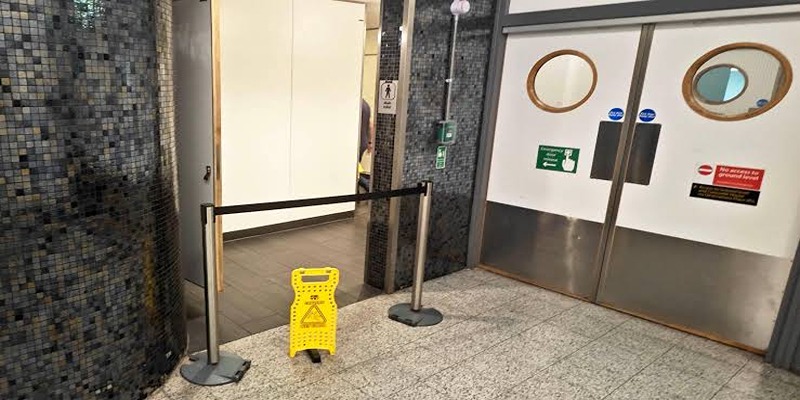
Image Source: bbc.com
The short version is that the taps ran dry, not the runways. And that difference matters, because the flight itself may still go ahead while the journey around it becomes miserable. This is exactly why planning your Gatwick airport transfers before a peak summer travel day can make the ground part of the trip feel far calmer.
A water outage that closed the toilets, not the flights
On 26 July 2026, both of Gatwick’s terminals lost their water supply after a power failure at the Bough Beech water treatment works in Kent, run by SES Water, as reported at the time. The knock-on effects were instant. Flushing toilets stopped working. Hand basins ran dry. Bars and restaurants shut because they could not wash up or serve drinks. Staff handed out bottled water while engineers chased the fault, which also knocked out supply to homes across parts of Kent, Surrey and Sussex.
Here is the part that catches people off guard: the planes were fine. Gatwick confirmed no cancellations linked to the outage, and water was back by the afternoon. So this was not a disaster in the dramatic sense. It was a few hours of real misery for tens of thousands of people who just wanted a toilet, a drink and a calmer route to the gate. If the terminal itself is under pressure, a pre-booked London airport transfer at least removes the extra stress of ticket machines, rail changes and last-minute taxi queues
| Fun Fact |
| Gatwick runs all of that traffic through a single runway, which makes it the busiest single-runway airport in the world. On a busy summer day it can push well over a hundred thousand passengers through those two terminals. When one small thing breaks, an enormous number of people feel it at once. |
Why Does Summer Make London’s Airports So Fragile?
It comes down to sheer volume, and the thin margins that come with running flat out.
More people, more heat, and less room for error
Summer is when everyone travels at once. School holidays, package trips, family visits, festival season. Heathrow, Gatwick, Luton and Stansted all run close to capacity from late July deep into August, and a system operating at full tilt has nothing spare when a fault appears. A burst water main, a signal failure on the Gatwick Express, a heatwave forcing speed limits on the tracks, any of it lands far harder in August than it would in a slow week.
The trains are their own summer gamble. Rail engineering works cluster around bank holidays, heat can trigger rail speed restrictions, and dragging two suitcases and a tired child through a delayed, sweaty station is nobody’s idea of a holiday warm-up. This is exactly where a London airport taxi earns its keep, because it sidesteps the whole rail lottery and gives you one fixed route from door to terminal.
| Fun Fact |
| It is often reported that carriages on parts of the London Underground get hotter in summer than the legal limit for transporting farm animals, which sits around 30C. You are allowed to sit in it. A cow legally is not. Worth remembering before you commit to the Tube with a summer’s worth of luggage. |
For a wider version of this problem, the guide to airport transfer in a heatwave explains why trains, platforms and luggage-heavy airport runs become harder during hot-weather travel.
Can a Private Transfer Really Make Peak-Season Travel Calmer?
It will not fix a broken water main, so let us be honest about what it does and does not do.
It fixes the part of the trip that is actually in your hands
A car will not reopen the toilets or restart treatment works. What it does is strip every other decision out of your morning. With a private airport transfer, a professional driver meets you, helps with the bags, and takes you door to door in a pre-booked vehicle. No ticket machines, no platform changes, no standing on a hot concourse wondering whether the next train has been cancelled. The private airport transfer is the best option because it offers fixed fares, flight tracking, meet-and-greet pickup and 24-hour airport coverage.
That matters most on exactly the kind of day Gatwick just had. When the terminal wobbles, the calm part of your journey becomes the drive. You step out of the chaos and into a seat that is already yours. Arrivals work the same way in reverse. After a long flight into a stressed airport, the last thing you want is to hunt for a cab or queue for a train, and a meet and greet airport transfer driver waiting with your name on a board turns the worst part of the trip into the easiest.
My London Transfer builds its Gatwick airport transfers around this idea, with live flight tracking so your driver adjusts to when you actually land, not the time printed on the ticket.
How Much Do Gatwick Airport Transfers Cost in 2026?
Less than most people assume, and the price does not jump just because it is August.
Fixed fares from around £80, with no summer surge
A private taxi from Gatwick to London with My London Transfer starts from about £80 for a standard saloon and typically lands between £90 and £120 for a run into central London, depending on your exact address and the vehicle you choose. The trip covers roughly 27 to 29 miles and takes 60 to 90 minutes on the M23 or M25.
For comparison, the train sits around £13 to £20 per person, and a metered taxi from the rank can run anywhere from £80 to £130 depending on traffic and destination. On paper the train looks cheapest, and for a solo traveller with one bag it often is. Split a fixed private fare across three or four people with luggage, though, and the maths shifts fast, especially when nobody has to buy separate tickets or wrestle cases through barriers.
The detail that really counts in peak season is that the fare is fixed the moment you book. No meter creeping up in traffic. No surge because it happens to be a Friday in August. If you want to explain that difference more clearly, the guide to flat rates vs metered airport taxis is the best supporting internal link.
If you are hopping between airports, a Gatwick to Heathrow transfer is around £107 and takes roughly 45 minutes, which comfortably beats two trains and an Underground change with cases in tow.
Heading beyond central London is just as simple, because the price is quoted upfront for the full door-to-door distance. A run down to the coast at Brighton is roughly £163 and about 45 minutes, Gatwick to Luton is around £147, and Gatwick to Stansted sits at a similar £147. None of those figures change if the traffic is heavy or the calendar says peak weekend, which is the entire point of a fixed quote. You see the number before you commit, and that number is what you pay.
Is a Pre-Booked Transfer Really Better Than Grabbing a Cab on the Day?
On a quiet Tuesday it might be a coin toss. On a peak summer weekend, it is not close.
You lock the car, the price and the timing before you leave home
A pre-booked airport transfer means the vehicle is reserved for you, the fare is agreed, and the driver is already tracking your movements. Walk-up cabs at the rank are fine when they are there, but on a busy arrivals evening you can end up behind fifty other tired travellers with the meter running from the first minute. Learn more benefits reading our guide on the benefits of pre-booking your taxi to Gatwick Airport.
There is also a quiet cost people forget. Gatwick’s forecourt drop-off charge rose to £10 for up to ten minutes in January 2026, up from £7, with £1 for each extra ten minutes after that. A good transfer company plans pickups and drop-offs around these rules so you are not paying to idle at a curb. Small things, but they stack up on a family trip. If you would rather not think about any of it, the booking form takes about two minutes and hands the whole problem to someone else.
What If You Are Flying Via Heathrow, Luton or Stansted Instead?
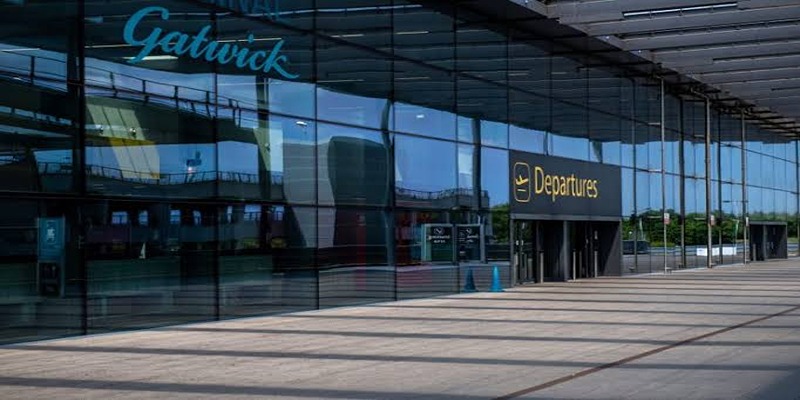
Image Source: bbc.com
Same city, same summer, same logic. Gatwick just happened to be the one in the headlines this time.
Every London airport has the same peak-season problem
Heathrow is the busiest airport in the country and the one most likely to test your patience in August. Heathrow airport transfers work exactly like the Gatwick version: door to door, fixed price, driver tracking the flight. Luton and Stansted sit further out, which makes the train option longer and the case for a direct car stronger, not weaker. A tired 11pm landing is a great deal more bearable when a driver is waiting than when you are decoding a rail replacement bus.
Distance is the quiet argument for a car at the outer airports. Stansted is around 40 miles from central London and Luton is not much closer, so the rail journey involves a train, a shuttle and usually a change, all of it slower and more fragile in summer. A direct transfer collapses that into one seat and one price.
| Fun Fact |
| Luton and Stansted both built their names on late-night, early-morning budget flights, which is precisely when public transport is thinnest. A 5am departure or a midnight landing is the moment a waiting driver is worth the most and a rail timetable helps the least. |
The point is not that any single airport is worse than the rest. It is that summer stretches all of them thin, and the fix is identical everywhere. Take the guesswork out of the ground journey and you have removed most of what actually goes wrong on a trip. That is the whole case for private airport transfers across London, in one sentence.
Travelling With Family or a Big Group This Summer?
This is where a private transfer stops being a nice-to-have and becomes the obvious choice.
One vehicle, everyone’s bags, nobody left on a platform
Try moving four adults, two kids, a buggy and six suitcases through a summer rail network and you will understand why families quietly love a single booked car. Everyone travels together. The luggage goes in the boot, not on your lap. Nobody sprints for a connection. If you are unsure whether a saloon, MPV or minibus is the right fit, the luggage guide is worth checking before booking, because passenger count alone does not tell you whether everyone’s bags will fit.
Child seats are worth flagging when you book, and the driver sorts them before you arrive, which saves the usual airport scramble. The child seat guide spells out what fits which age. Travelling with elderly relatives is easier too, since door-to-door service with luggage help removes the two hardest parts of airport travel in one move. Business travellers get the same benefit from an executive or corporate transfer, where the quiet car doubles as an office on wheels.
When Should You Book, and What Do You Do If Your Airport Has a Bad Day?
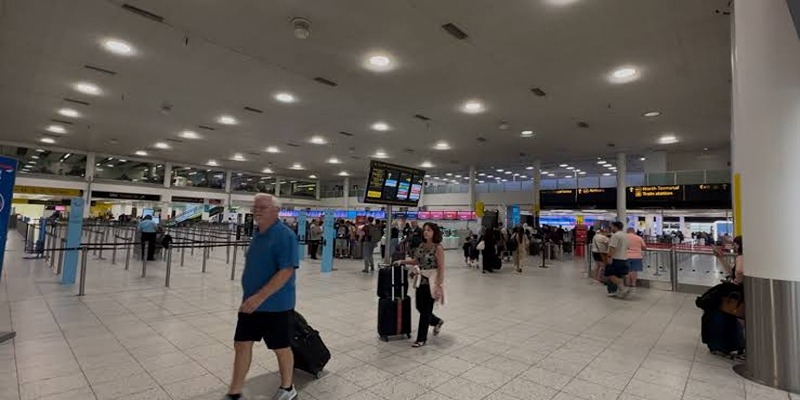
Image Source: news.sky.com
Book earlier than feels necessary, and keep a small kit ready for the wait.
Reserve ahead for peak weekends, and pack for the unexpected
Peak summer weekends run out of driver availability the same way they run out of flights and hotels. Booking a week or two ahead locks in both the price and the car. Same-day is often still possible, but on the busiest dates you are rolling the dice, and the day you least want to gamble is the day the terminal is already struggling. If you are budgeting the journey before you reserve, the London taxi fare calculator can help you estimate the cost from your home, hotel, airport or onward destination.
As for the bad-day scenario Gatwick just lived through, a few habits make it far easier to ride out. Carry a refillable bottle you can top up after security, so a closed cafe is an annoyance rather than a crisis. Keep medication, a phone charger and a power bank in your hand luggage, never in the hold. Screenshot your booking confirmations in case the wifi buckles under the crowd. And give yourself a wider buffer than usual in July and August, because the day the terminal struggles is the day every queue runs long.
Do that, and if the airport falls apart around you, the calm part of your day is the Gatwick airport transfers you already sorted. Everything booked in advance is simply one less thing to fix on the spot, and on a bad day at a busy airport, that is worth more than the fare.
So, What Is the Smart Move Before You Fly This Summer?
It is neither complicated nor expensive, which is the best kind of travel advice.
Sort the ride, then stop thinking about it
You cannot control whether a treatment loses power or a train gets cancelled. You can control whether a professional driver is waiting for you with a fixed price, cold water and space for the bags. That one decision, made in advance, absorbs most of the stress that summer travel throws at you. The Gatwick outage was a reminder that airports have off days, usually on the busiest weekends, and usually when you have the least patience for it.
Travelling through Gatwick this summer?
Check your flight, pack the essentials in hand luggage, and make the ground journey the easy part. My London Transfer offers private, fixed-price Gatwick airport transfers with meet-and-greet pickup, flight tracking, luggage help and door-to-door travel across London and beyond.
No platform scramble, no meter anxiety, no last-minute cab hunt, just a calmer way to start or finish your trip.
Frequently Asked Questions (FAQs)
1. What caused the Gatwick water outage in July 2026?
A power failure at the Bough Beech water treatment works in Kent, run by SES Water, cut the supply to both Gatwick terminals on Sunday 26 July 2026. The same fault affected homes across parts of Kent, Surrey and Sussex, and water was restored later the same afternoon.
2. Were flights cancelled during the Gatwick water outage?
No. Gatwick confirmed there were no flight cancellations linked to the outage. The disruption hit terminal facilities like toilets, taps and food outlets rather than the runway, so aircraft kept operating on schedule throughout.
3. How much is a taxi from Gatwick to central London?
A private transfer generally costs from about £80 for a standard saloon and often lands between £90 and £120 into central London, depending on your address and vehicle. A metered rank taxi can run £80 to £130, while the train is roughly £13 to £20 per person.
4. How long does a Gatwick to London taxi take?
Usually between 60 and 90 minutes, covering around 27 to 29 miles on the M23 or M25. The exact time depends on traffic and your drop-off point, which is why a good driver checks live conditions before setting off.
5. Is the train or a private transfer cheaper from Gatwick?
For one person with light luggage, the train is usually cheaper. For families or small groups with bags, a fixed private fare split between passengers often works out similar or better, and you skip the ticket queues, changes and platform stress.
6. What is meet and greet at the airport?
It means your driver waits inside the arrivals hall holding a board with your name, helps with your luggage, and walks you to the car. There is no hunting for a pickup point or queuing at a rank after a long flight.
7. Do private airport transfers cost more in summer?
With a fixed-price service the fare is agreed when you book and does not surge because it is a peak weekend. That is one of the main reasons travellers pre-book in July and August, when on-the-day options can get scarce and pricey.
8. How far in advance should I book an airport transfer?
For peak summer dates, a week or two ahead is sensible, since driver availability tightens on busy weekends much like flights and hotels. Same-day booking is often possible, but booking early locks in both the price and the car.
9. What happens to my transfer if my flight is delayed?
A company that tracks your flight adjusts the pickup time automatically, so a delay does not cost you the ride or an extra fee. Your driver arrives to match when you actually land, not the time printed on your ticket.
10. Which is London’s busiest airport?
Heathrow is the busiest by passenger numbers, followed by Gatwick. Gatwick is also the busiest single-runway airport in the world, which is part of why even a short fault there affects so many people at once.
11. How much is the drop-off charge at Gatwick?
Gatwick charges £10 for up to ten minutes in the forecourt drop-off zones at both terminals, with £1 for each additional ten minutes. The fee rose from £7 in January 2026, so booking a transfer that plans around it keeps costs predictable.
12. Can I book one transfer for a large family or group?
Yes. Vehicles range from saloons for couples to MPVs for families and minibuses seating up to 16, so a whole group travels together in one booking. Mention child seats when you book and the driver arranges them in advance.